Type Text Sentences Read from a Unicode Text File onto Active Application Window
Using the Type Data from File action in Auto Mouse Click, you can create a macro script that sequentially reads text lines from a Unicode text file and types them automatically into an active application window. Before running this action, ensure your setup meets the following requirements:
- Prepare a text file saved in a Unicode format (such as UTF-8 or UTF-16).
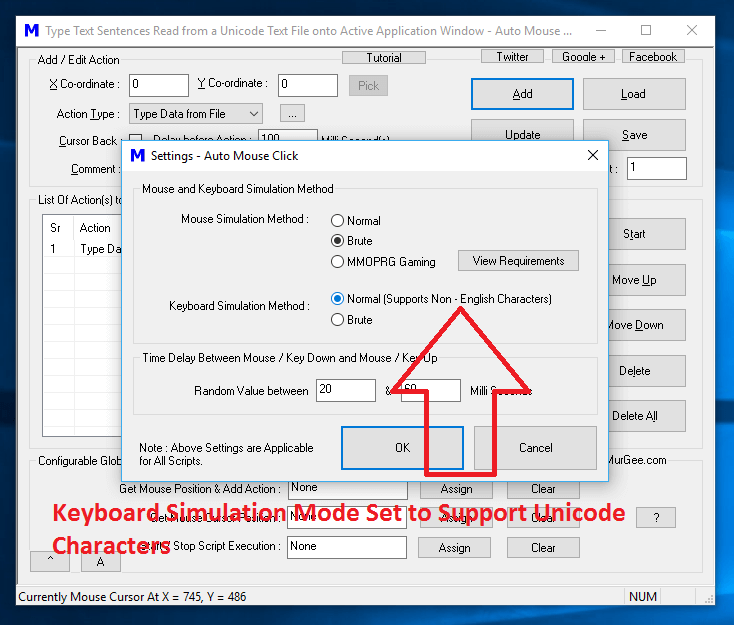
- Ensure that your keyboard simulation method in Auto Mouse Click settings is configured to support Unicode character input.
- Structure text in your file line-by-line. Each line terminated by a line break (carriage return / line feed) is treated as a single text sentence during automated typing.
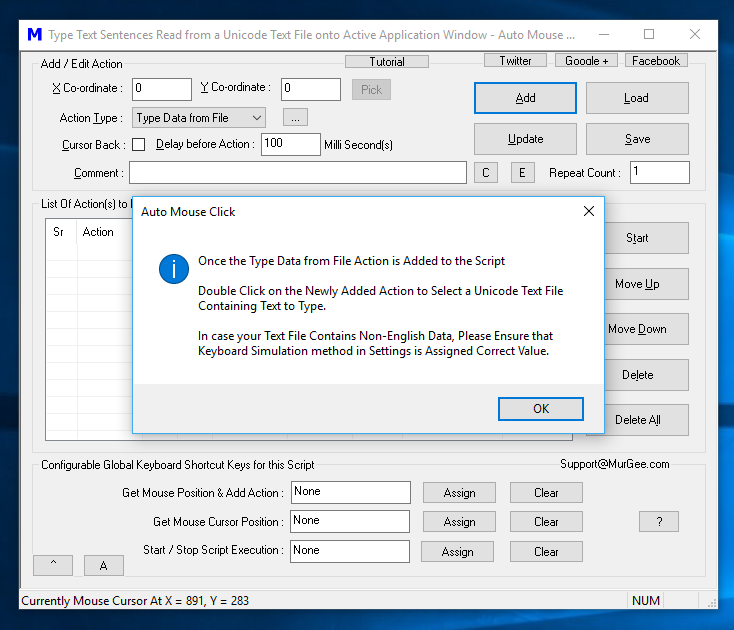
To begin, add a Type Data from File action to your script and review the introductory dialog shown below.
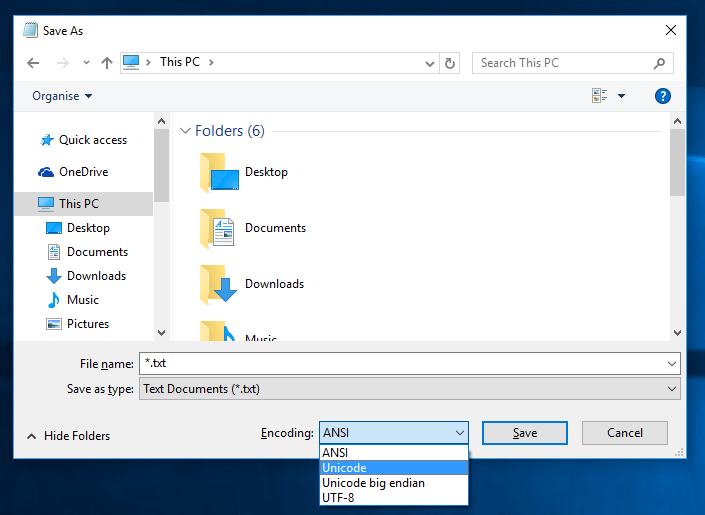
Select your target Unicode text file (`.txt`). Standard text editors like Windows Notepad allow you to choose encoding options (such as UTF-8 or UTF-16) when saving a file, ensuring non-English and special characters render accurately during script execution.
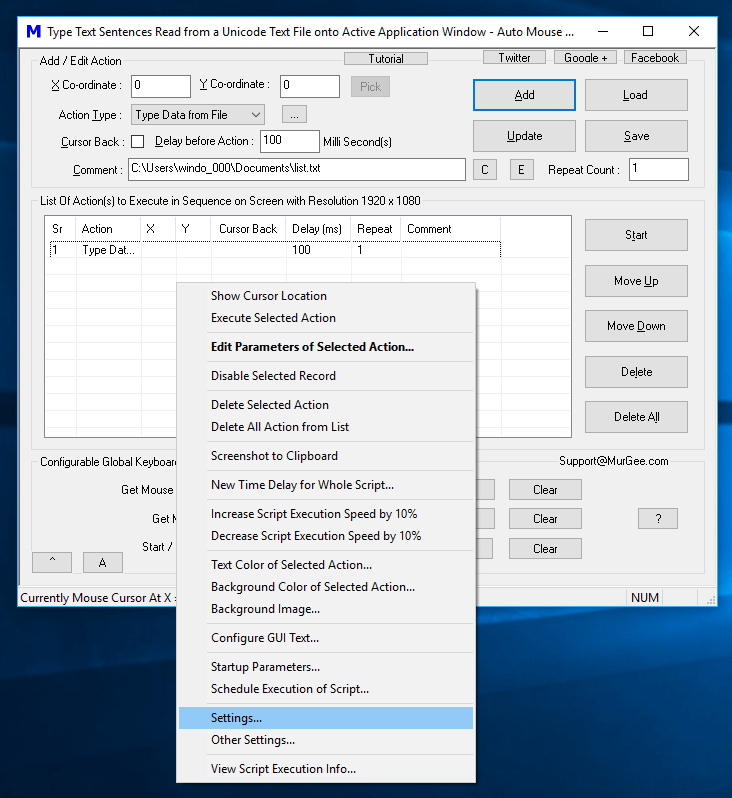
Double-click the Type Data from File action in your script list and select your saved Unicode text file. After confirmation, the file path will be loaded into the action comment field.
Configuring Keyboard Simulation for Unicode Characters
Auto Mouse Click supports two keyboard simulation modes: Normal (standard English keycodes) and Unicode. If your file contains non-English characters or complex symbols, verify that the keyboard simulation mode is set to Unicode in the application settings.
When a script containing Type Data from File executes, it reads the next line from the specified text file and types it into whichever window currently holds keyboard focus. Subsequent executions of the action automatically advance to subsequent lines in the file.
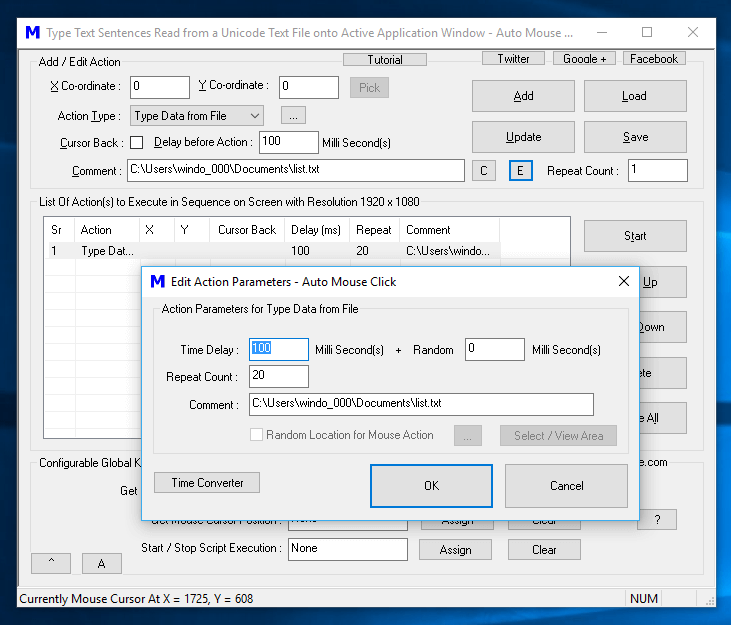
You can adjust the action Repeat Count parameter or use script loops to process multiple lines sequentially in a single run. For static text entry that does not change dynamically from a file, consider using the Type Text Action instead.