Schedule Macro Script Execution with Windows Task Scheduler
To schedule a macro script to run automatically at a specific date and time—either once or on a recurring schedule—you can use Windows Task Scheduler. This guide walks you through creating a task, configuring launch parameters, and testing script execution. Ensure that target application windows and desktop UI elements are positioned consistently for automated mouse operations.
Schedule Script Execution via Windows Task Scheduler
Follow the step-by-step procedure below to create a scheduled task for your macro script:
Create your macro script in Auto Mouse Click and save it (`.mamc`) to a designated location on your computer.
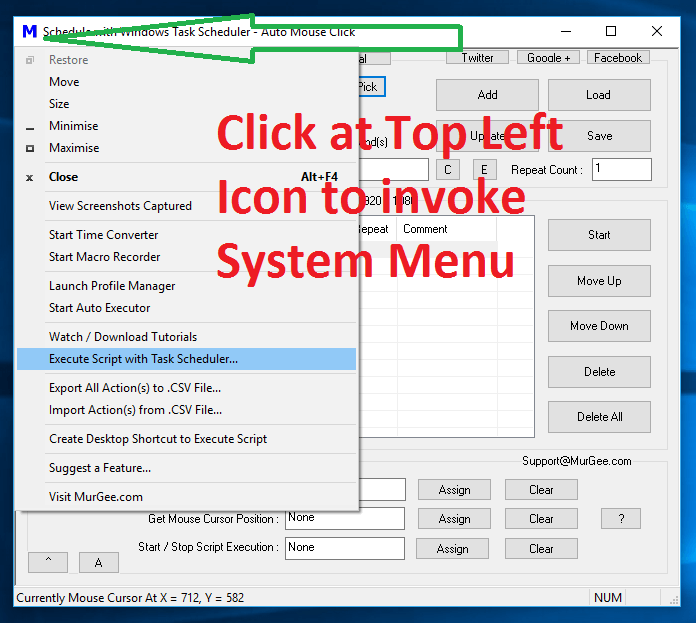
Open the application menu by clicking the system icon in the top-left corner of Auto Mouse Click, then select Task Scheduler Command Copy.
Copy Task Scheduler Command Line Arguments from Main Menu
This action copies the exact executable path and command-line arguments required by Windows Task Scheduler to your clipboard.
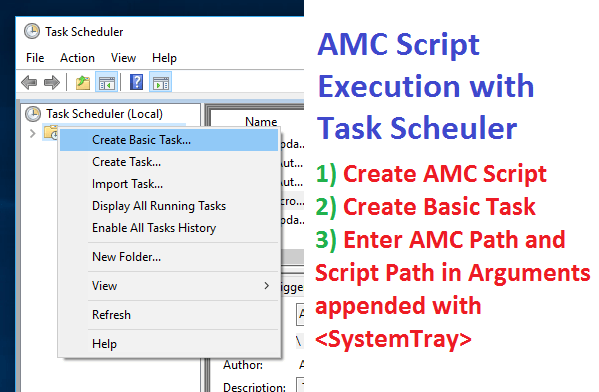
Launch Windows Task Scheduler (`taskschd.msc`) and select Create Basic Task... from the Actions panel. Enter a Task Name and an optional description.
On the Task Trigger page, select the desired schedule frequency (e.g., Daily, Weekly, Monthly, One time, When the computer starts, or When I log on).
Configure the specific start date, time, or event trigger parameters as prompted.
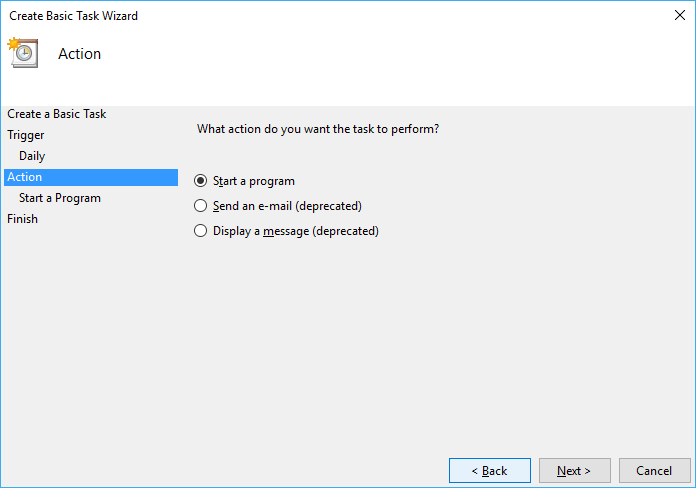
On the Action page, choose Start a program and click Next.
Select Start a Program Action in Windows Task Scheduler
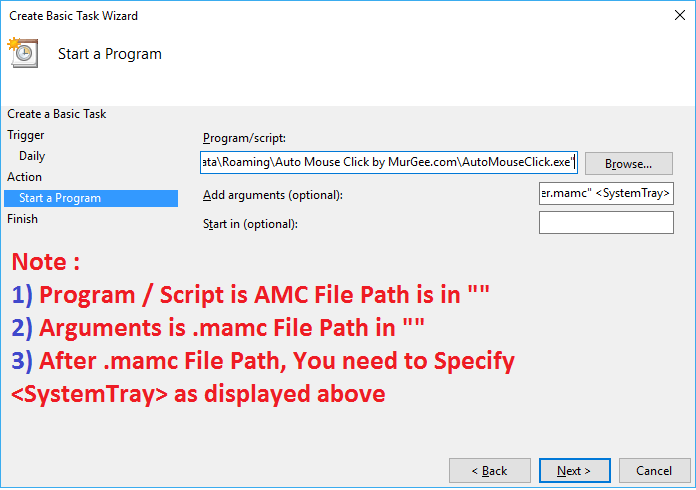
Paste the copied program path into the Program/script field, and paste the script file path along with command parameters into the Add arguments field.
Configure Program Path and Command Line Arguments
Important: The argument string must include the <SystemTray> parameter. Including <SystemTray> instructs Auto Mouse Click to execute the script immediately upon launch. Without it, the application will simply open the script for editing without running it.
Click Next, review your task settings, and click Finish to create the scheduled task.
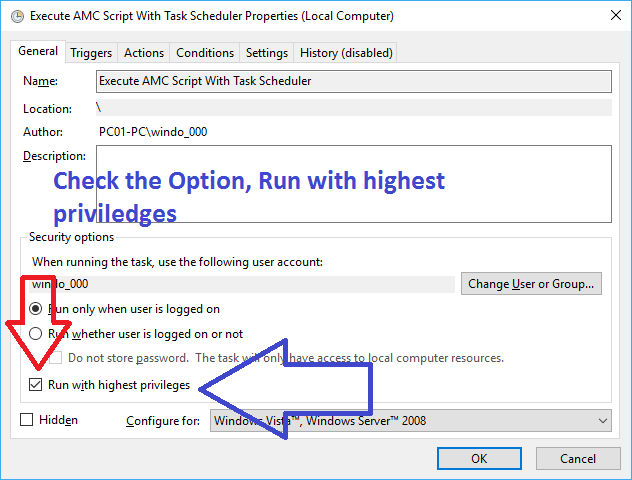
Open the properties dialog of your newly created task in Task Scheduler, and check the option Run with highest privileges on the General tab.
Enable Run with Highest Privileges in Task Properties
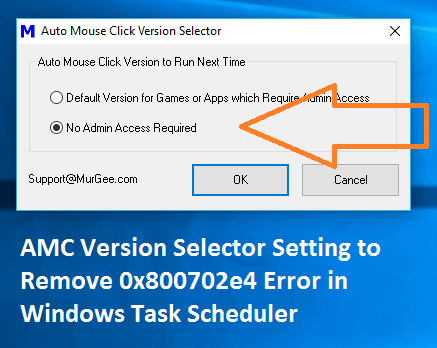
After completing these steps, manually trigger the task in Windows Task Scheduler to verify error-free execution. Depending on whether your scripts target standard desktop applications or games requiring Administrator access, verify your elevation settings in the AMC Version Selector.
AMC Version Selector Settings to Prevent Error 0x800702e4
If Auto Mouse Click is configured to require Administrator privileges while Task Scheduler runs with standard privileges, Windows may return error code 0x800702e4 (The requested operation requires elevation). Enabling "Run with highest privileges" or launching AMC in standard user mode resolves this error.
Alternatively, if you only need a simple delayed execution without configuring Windows Task Scheduler, you can use built-in Delayed Execution Parameters inside Auto Mouse Click.